
Bamboo Fabric in Clothing: Is It Worth Adding to Your Collection?
Bamboo fabric is soft, breathable, and ideal for basics and activewear. Here's what to know before ordering bamboo garments in bulk.
What Bamboo Fabric Actually Is
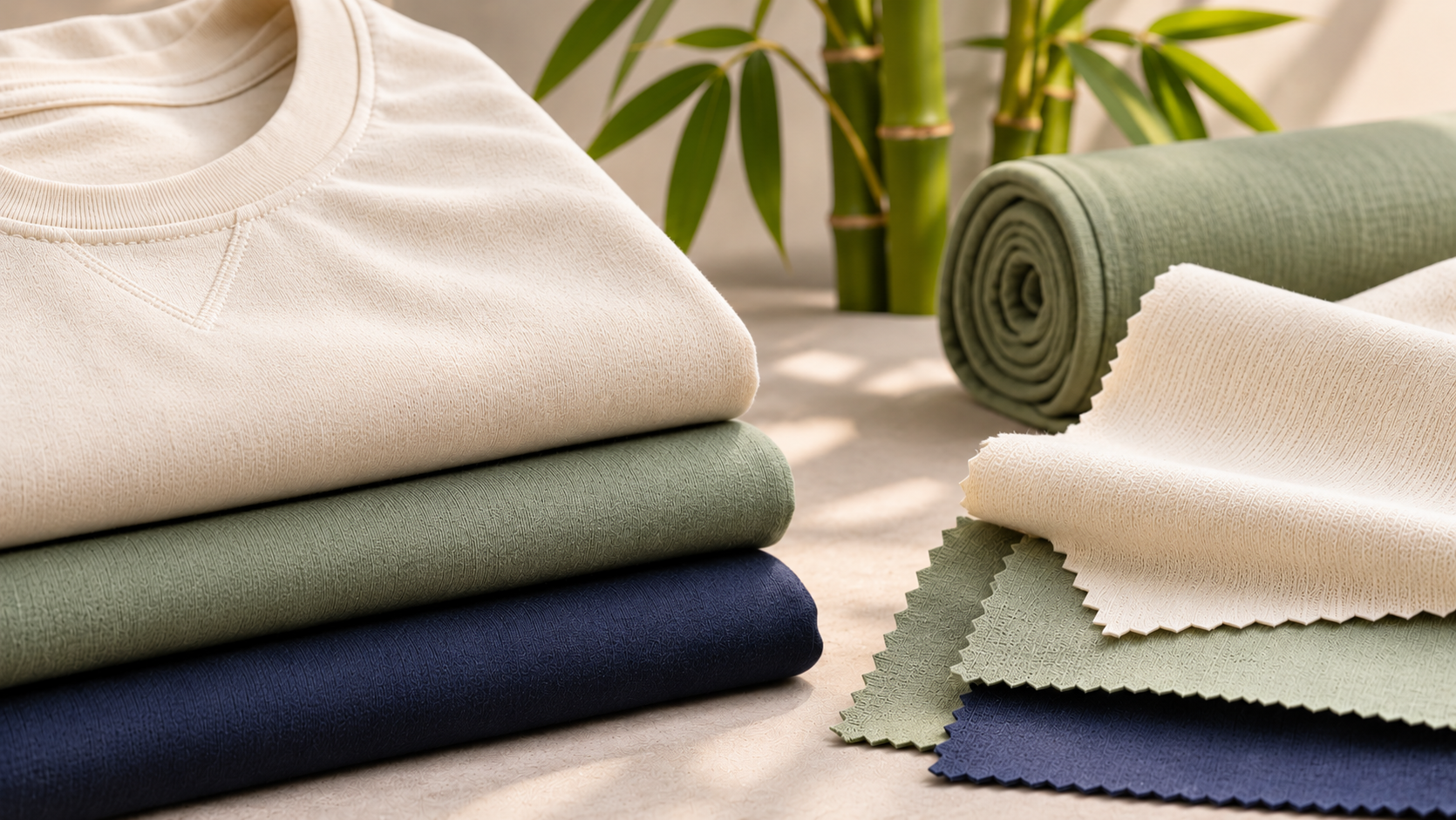
Bamboo fabric clothing is usually made from bamboo viscose, also called bamboo rayon. The bamboo plant is harvested and pulped, then processed through a chemical viscose method to produce fibres that are soft, breathable, and moisture-wicking. The result is a fabric with a silky hand feel that sits closer to modal than to cotton in terms of drape and texture.
- Bamboo viscose uses the same manufacturing process as other viscose fabrics — the bamboo origin does not automatically make it sustainable
- The softness of bamboo viscose fabric comes from the fine fibre diameter, not from chemical treatments or finishes
- Mechanically processed bamboo is stiffer and less common — most bamboo fabric in the market is chemically processed viscose
It is worth understanding the distinction between bamboo viscose and bamboo linen. Bamboo linen is mechanically processed and retains the natural texture of the bamboo plant. Bamboo viscose, which is what most brands mean when they say bamboo fabric, is chemically processed and much softer. The two are different products with different characteristics and different price points.
Where Bamboo Fabric Works Well
Bamboo fabric garments perform best in categories where softness and breathability are the main selling points. The fabric is naturally moisture-wicking and temperature-regulating, which makes it a good fit for skin-contact basics. T-shirts, pyjamas, loungewear, and baby clothing are the most common bamboo viscose categories in bulk production.
Bamboo viscose is naturally moisture-wicking, which pulls sweat away from the skin faster than standard cotton. This makes it a practical choice for base layers and active-casual garments without the synthetic feel of polyester. It is also naturally odour-resistant, which extends the perceived freshness of the garment between washes.
- Moisture-wicking properties make it suitable for base layers and active-casual garments without the synthetic feel
- Softer hand feel than cotton at the same weight — typically perceived as a premium fabric by end customers
- Not suited to outerwear, structured garments, or high-abrasion uses where durability matters more than softness
The Limitations Brands Should Know Before Ordering
Bamboo viscose has a few practical limitations worth knowing before you spec it. The fabric is more delicate than cotton and can pill or lose its shape if not treated correctly in production and care. Shrinkage can be an issue, particularly in garments that are not pre-shrunk during finishing.
- Pilling risk is higher than cotton — yarn quality and GSM selection matter
- Pre-shrinking during production is recommended to avoid post-wash size issues
- Marketing bamboo as a sustainable fabric requires accurate claims about how it was processed
The environmental claims around bamboo fabric are more complicated than the marketing suggests. The bamboo plant grows quickly and needs little water or pesticide. However, the bamboo viscose fabric manufacturing process uses chemicals that can be harmful if not handled with closed-loop systems. According to the Federal Trade Commission, bamboo viscose cannot be marketed as inherently eco-friendly without disclosure of the chemical process involved.
Bamboo Blends vs 100% Bamboo
Most bamboo blend clothing in bulk production is a bamboo viscose and cotton or bamboo viscose and spandex combination rather than 100% bamboo. A common ratio is 70% bamboo viscose / 30% cotton, which improves durability and structure while keeping the softness benefit. For activewear, 95% bamboo viscose / 5% spandex is a typical blend for stretch and recovery.
100% bamboo viscose is available but less common in bulk production. It costs more, is more delicate to handle, and can be harder to source consistently from a single mill. For most brands, a bamboo blend hits the softness positioning without the added sourcing complexity.
- 70/30 bamboo-cotton blends are easier to source consistently and more durable than 100% bamboo
- Spandex additions of 5 to 8 percent improve recovery in activewear and fitted cuts
- 100% bamboo viscose is best reserved for premium positioning where the fabric story is part of the brand
Ordering Bamboo Fabric Garments Through UMAAS Exports
UMAAS Exports is a sustainable fabric manufacturer based in Lahore, Pakistan, producing garments in bamboo viscose and bamboo blend fabrics alongside its full cotton and synthetic range. As a Pakistan apparel manufacturer with export experience since 2018, the team sources bamboo viscose from verified mills and confirms fabric spec, blend ratio, and GSM at brief stage.
MOQ is 30 pieces per design with sizes mixed within that run. Lead time runs 26 to 42 days from confirmed sample to dispatch. Decoration options including screen printing, DTG, DTF, and embroidery are available on bamboo fabric garments depending on fabric weight and construction.
Ready to start production?
Tell us about your brand, product, and quantities. We will reply with samples, pricing, and timelines.