
Denim Fabric for Bulk Orders: Weight, Wash Types, and What to Check Before Production
A practical guide to denim fabric weight, wash finishes, and what to verify before placing a bulk production order with confidence.
Introduction
Denim is one of the most ordered fabrics in bulk apparel production. But it is also one of the most misunderstood when it comes to specs. If you place a bulk denim fabric weight order without pinning down the exact GSM and wash finish upfront, what arrives at production can look and feel nothing like your sample.
This guide breaks down what you actually need to know: how denim GSM works, which wash types do what, and what to confirm before your order goes into production.
What Denim Weight Means and Why It Changes Everything
Denim fabric weight is measured in ounces per square yard (oz) or grams per square meter (GSM). These two units say the same thing: 1 oz equals roughly 33.9 GSM.
Lightweight denim sits under 8 oz (under 270 GSM). It is thin and drapy, good for shirts and summer styles. Midweight denim runs between 10 and 12 oz (340 to 400 GSM). This is the standard for jeans and jackets and the most common range for bulk denim sourcing. Heavyweight denim starts at 14 oz and above (475 GSM+). It is dense and stiff, used for raw denim and workwear styles.
The North American market strongly prefers midweight in the 250 to 500 GSM range, with stretch content of 1 to 3 percent spandex as standard. If you are producing denim for clothing brands targeting that market, midweight stretch is your safest starting point.
Weight directly affects drape, durability, how the garment looks at retail, and how it performs after washing. A factory can swap in a lighter fabric between sample and bulk without you knowing unless your tech pack locks the GSM in writing.
Denim Wash Types Explained
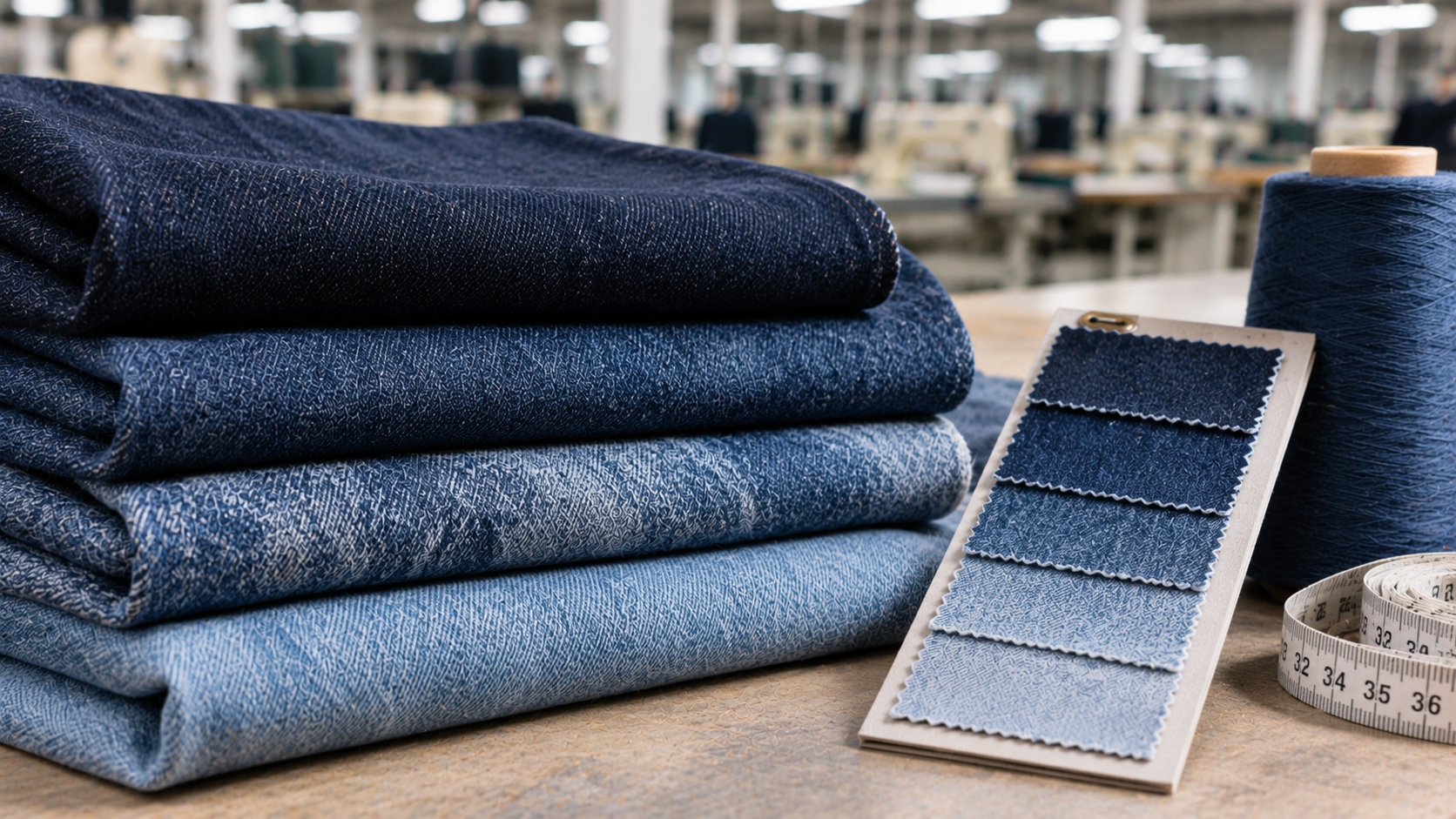
The wash finish is what gives denim its final color, texture, and feel. Different washes suit different aesthetics and production budgets.
Rinse Wash (Raw Denim)
This is the base. No heavy washing happens after dyeing, so the fabric keeps its original dark indigo. Raw denim has a stiff hand feel and fades naturally with wear. It is popular in premium and Japanese denim. For stretch denim fabric, you rarely start here since stretch blends soften faster on their own.
Stone Wash
Denim is tumbled with pumice stones in industrial machines. The abrasion breaks down surface dye and gives the fabric a faded, worn-in look with a softer feel. It is one of the most common finishes for bulk denim sourcing because the result is consistent and widely recognized.
Enzyme Wash
Cellulase enzymes break down cotton fiber on the surface, mimicking the stone-wash effect but with less physical damage to the fabric and equipment. It is a more eco-friendly option, produces a smoother finish, and is gentler on the fabric structure. Good for brands that want a vintage look without heavy mechanical processing.
Acid Wash
Pumice stones soaked in chlorine or potassium permanganate are tumbled with the denim. This creates a high-contrast, mottled effect where light and dark patches sit next to each other. The result is bold and fashion-forward. It requires strict quality control since the effect can be uneven between pieces in the same batch.
Bleach Wash
A bleaching agent lightens the denim uniformly across the fabric, taking it from dark indigo to lighter shades. The strength of the bleach controls how light the final result is. Used for light-wash jeans and faded aesthetics.
Sand Wash
Chemical or mechanical abrasion using sand or silica creates a soft, suede-like texture with a faded appearance. It sits between stone wash and enzyme wash in terms of feel and finish.
Ozone Wash
Ozone gas replaces bleaching chemicals to fade the denim. It uses less water and fewer harsh chemicals while producing a faded result similar to bleach wash. One of the more sustainable finishing options available in production today.
What to Check Before Production
Before you confirm a bulk denim order, there are several things you need to have locked in writing.
Get the weight confirmed in both oz and denim GSM. Put both units in the tech pack. Suppliers in some regions use oz, others use GSM. Having both removes ambiguity and prevents substitutions.
Request a washed swatch before bulk. The wash result changes the fabric significantly. A pre-production sample in the confirmed wash finish is not optional. Approve the swatch first.
Check stretch denim fabric content separately. If you are ordering a stretch blend, the spandex percentage must be listed alongside the base GSM. A 400 GSM denim at 2 percent spandex behaves very differently from a 400 GSM rigid denim.
Confirm wash consistency standards. For acid wash especially, ask how the factory manages batch variation. High-contrast finishes are inherently more variable than stone or rinse wash.
Specify shrinkage tolerance. Denim shrinks after the first wash. If this is not addressed in the spec sheet, customers will receive garments that run small.
Lock the yarn type. Ring-spun indigo denim fades differently from open-end denim. Open-end is more cost-efficient for bulk but has a coarser feel. Know which one you are getting before production starts.
Where UMAAS Exports Fits In
UMAAS Exports works with clothing brands that need verified denim GSM sourcing without the guesswork. Whether you are placing your first denim order or scaling an existing line, the team can confirm fabric weight, coordinate wash sampling, and manage production handoff to keep your specs intact from sample to bulk.
Ready to start production?
Tell us about your brand, product, and quantities. We will reply with samples, pricing, and timelines.