
Cotton Polyester Blends: Which Ratio Fits Your Garment
Cotton polyester blends come in different ratios. This guide covers 100% cotton, 65/35, 80/20, and 50/50 options and which works best for each garment type.
Why the Blend Ratio You Choose Matters
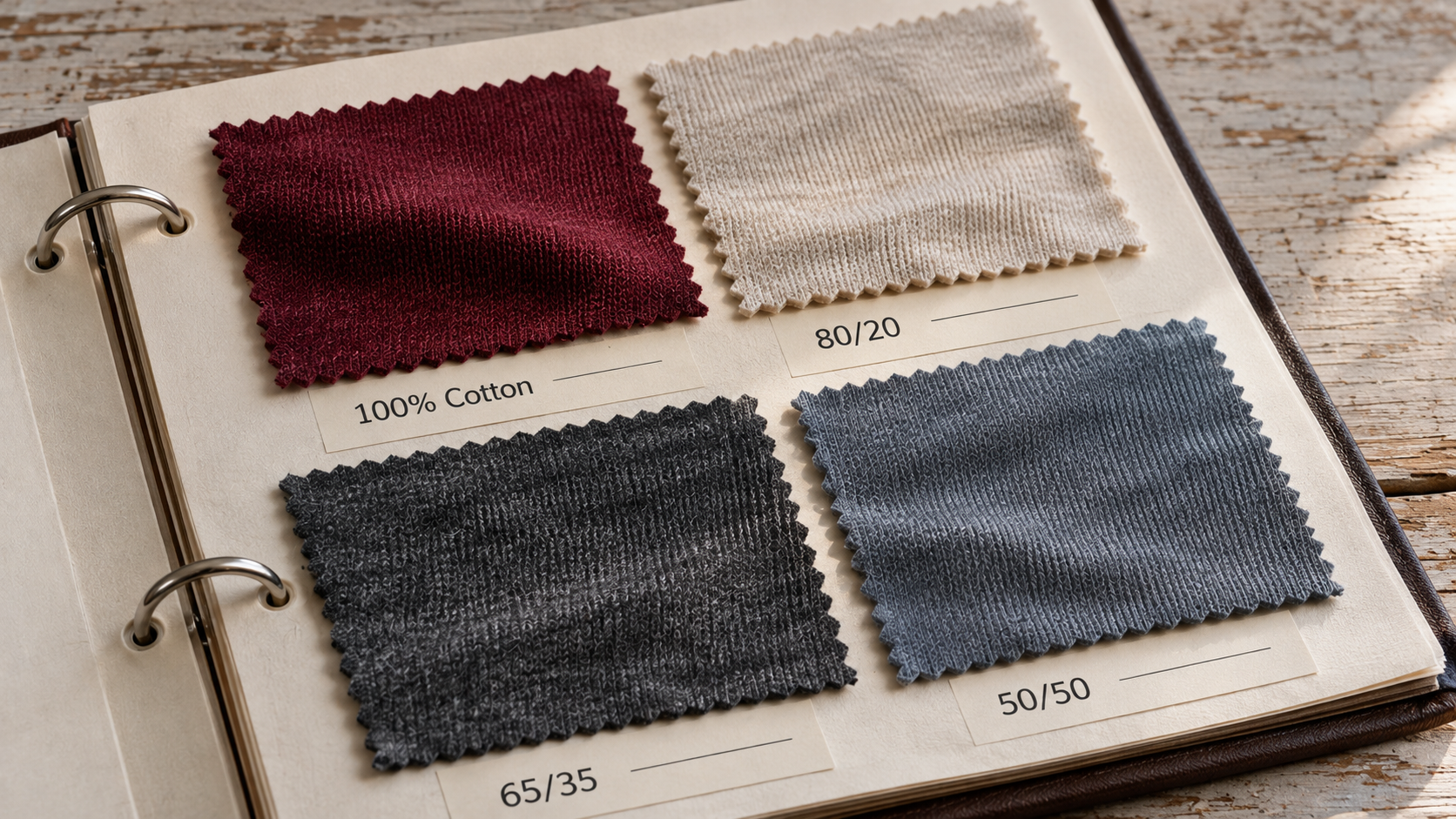
Cotton polyester blends are one of the most common fabric choices in bulk clothing production. The ratio of cotton to polyester in the fabric changes how the garment feels, how long it lasts, how it washes, and how it prints. For brands ordering hoodies, tees, tracksuits, and casual wear in bulk, getting this decision right before sampling saves time and rework.
UMAAS Exports produces across the full range of cotton blend garments from its factory in Lahore, Pakistan. This guide covers the main ratios used in production and what each one is best suited for.
- 100% cotton, 80/20, 65/35, and 50/50 are the four ratios most commonly ordered in bulk
- The right ratio depends on end use — comfort, durability, washability, or print focus
- Specifying ratio at brief stage prevents resourcing delays later in production
What 100% Cotton Gives You and Where It Falls Short
100% cotton is the softest option and breathes the best. It is the preferred choice for premium basics, skin-contact layers, and brands where natural feel is part of the product positioning. It works well with water-based inks, screen printing, and DTG.
The trade-off is shrinkage. 100% cotton garments shrink more than blends through washing, which means accurate pre-shrunk sizing and clear care instructions matter more with this fabric. For high-wash or high-use garments, a blend is usually the better call.
- Pre-shrinking during production reduces but does not eliminate post-wash shrinkage
- GSM range for 100% cotton tees typically sits between 160 and 220 GSM in bulk orders
- Not recommended for workwear or uniforms that go through heavy repeat washing
The 80/20 Blend: The Common Starting Point for Casual Brands
An 80/20 cotton polyester blend (80% cotton, 20% polyester) is a common middle-ground choice for casualwear. The cotton content keeps the hand feel close to natural, while the added polyester reduces shrinkage and adds some recovery to the fabric structure.
Streetwear brands and casualwear labels use 80/20 as a default because it performs well across a wide range of garment types without requiring heavy specification decisions upfront.
- Shrinkage is noticeably lower than 100% cotton without sacrificing softness significantly
- Works well with most decoration methods including screen print, embroidery, and DTF
- A reliable default for hoodies, sweatshirts, and casual tees in mid-range price positioning
The 65/35 Blend: More Durable and More Wash-Resistant
A 65/35 cotton polyester blend adds more polyester content, which means more durability, less shrinkage, and better shape retention through repeated washing. The feel moves slightly away from natural cotton but remains acceptable for most end uses.
This ratio is better suited to workwear, uniforms, and high-use garments where longevity matters more than softness. It is also a common choice for branded merchandise that needs to hold up over time.
- Better shape retention than 80/20 or 100% cotton after repeated machine washing
- Polyester content improves colour retention in dyed fabrics over time
- Commonly used in corporate uniforms, hospitality workwear, and logistics sector garments
The 50/50 Blend: A Balanced Option for Printed Garments
A 50/50 cotton polyester blend sits in the middle. It combines reasonable softness with the durability and dimensional stability that comes from equal polyester content. It is frequently chosen when decoration is the main focus of the garment.
The higher polyester content supports colour vibrancy in screen printing and DTF, and the lower cost per unit compared to higher-cotton options makes it practical for large volume print runs.
- Dye sublimation works better on higher polyester content — 50/50 sits at the lower viable threshold
- Lower fabric cost per unit compared to 80/20 or 100% cotton at the same GSM
- Suitable for event merchandise, promotional garments, and budget-conscious bulk orders
How UMAAS Exports Handles Cotton Blend Orders
UMAAS Exports is a Pakistan apparel manufacturer producing cotton and cotton blend garments from its factory in Lahore, and has been exporting to the UK, US, Canada, Germany, Spain, and the EU since 2018. Fabric sourcing is the first step in the production process, with materials selected and inspected before cutting begins.
As a bulk clothing manufacturer, UMAAS offers Pantone colour matching on all cotton and blend orders. Decoration work including screen printing, DTG, DTF, embroidery, sublimation, puff print, acid wash, and rhinestone is done in-house. MOQ is 30 pieces per design with sizes mixed within that run. Lead time is 26 to 42 days from confirmed sample to dispatch.
Ready to start production?
Tell us about your brand, product, and quantities. We will reply with samples, pricing, and timelines.