
Spandex in Clothing Manufacturing: How Much You Need and Why It Matters for Fit
A guide for clothing brands on spandex percentages, which garments need it, how much to specify, and what to confirm before bulk production.
How much spandex your garments actually need and why getting it wrong affects fit, return rates, and production quality.
What Spandex Does in a Garment
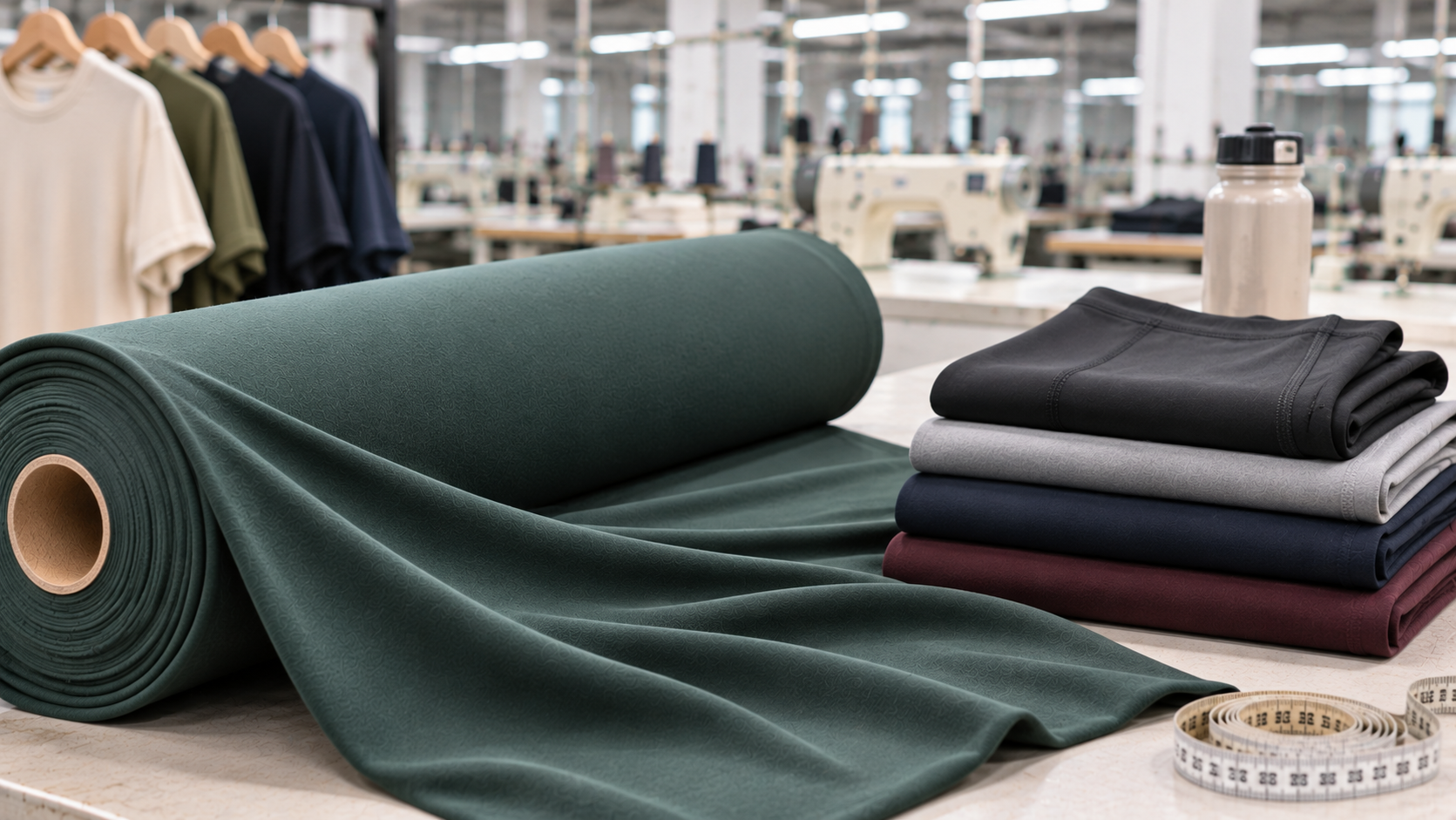
Spandex is a synthetic elastic fibre that stretches and returns to its original shape. It is almost never used on its own. Instead it is added in small percentages to other fabrics — cotton, polyester, nylon, modal — to give a garment stretch and recovery. For brands building spandex blend fabric garments like fitted t-shirts, leggings, activewear, or underwear, understanding how much spandex to specify and why it matters is essential before you place a bulk order.
Why Spandex Percentage Matters for Fit
The amount of spandex in a fabric directly affects how the garment fits and moves. Too little and the fabric pulls and loses shape after a few wears. Too much and the garment becomes uncomfortable, looks shiny, or feels restrictive. Getting the percentage right is one of the most practical decisions in clothing manufacturing spandex specifications.
A fabric with 2 to 4 percent spandex gives a slight stretch and helps the garment hold its shape without feeling clingy. This is common in everyday t-shirts, chinos, and casual tops. A fabric with 5 to 10 percent spandex gives moderate stretch and is used in fitted basics, underwear, and lounge sets. A fabric with 10 to 20 percent spandex gives high stretch and is designed for activewear, yoga pants, and compression garments where full range of motion is needed.
Common Spandex Blends by Garment Type
Different garment categories use different spandex fabric blends. The base fabric determines the drape and hand feel. The spandex percentage determines the stretch level and recovery. Both need to be specified in your order brief.
- Cotton with 2 to 5 percent spandex for stretch jeans, slim-fit shirts, and casual basics
- Polyester with 10 to 20 percent spandex for activewear, running tights, and sportswear
- Nylon with 15 to 25 percent spandex for swimwear, shapewear, and high-compression garments
- Modal with 5 to 10 percent spandex for fitted loungewear, premium basics, and soft underwear
What Happens When Spandex Is Wrong
Using the wrong spandex percentage is one of the more common causes of fit problems in bulk production. Garments that bag out at the knees or elbows, lose their shape after washing, or feel too tight across the shoulders usually have a spandex specification that does not match the garment's end use. For stretch fabric garment production, the specification needs to be agreed before sampling, not adjusted after.
What to Confirm With Your Manufacturer Before Production
Before bulk production on any spandex-containing garment, confirm the blend ratio in writing, the fabric weight in GSM, the stretch percentage in both directions (two-way or four-way stretch), and the wash care requirements. UMAAS Exports works with spandex and spandex blend fabrics and produces activewear, loungewear, and stretch basics from their manufacturing facility in Lahore, Pakistan. As a Pakistan spandex clothing manufacturer, they work with brands specifying exact blend ratios and can advise during the sampling stage.
How UMAAS Exports Handles Spandex Orders
UMAAS Exports has been manufacturing and exporting garments since 2018. They work with spandex alongside cotton, modal, polyester, nylon, fleece, and other fabrics listed on their manufacturing page. Orders start from 30 pieces per design with size mixing allowed, and lead times run 26 to 42 days from sample to dispatch. Decoration options include screen printing, embroidery, DTG, DTF, sublimation, and puff printing. UMAAS ships to the UK, US, Canada, Germany, Spain, and across the EU.
Ready to start production?
Tell us about your brand, product, and quantities. We will reply with samples, pricing, and timelines.