
Organic Cotton Clothing Manufacturing: Costs and What to Expect
Organic cotton clothing costs more than standard cotton. This guide covers what it means, what it costs extra, and what to expect from a factory.
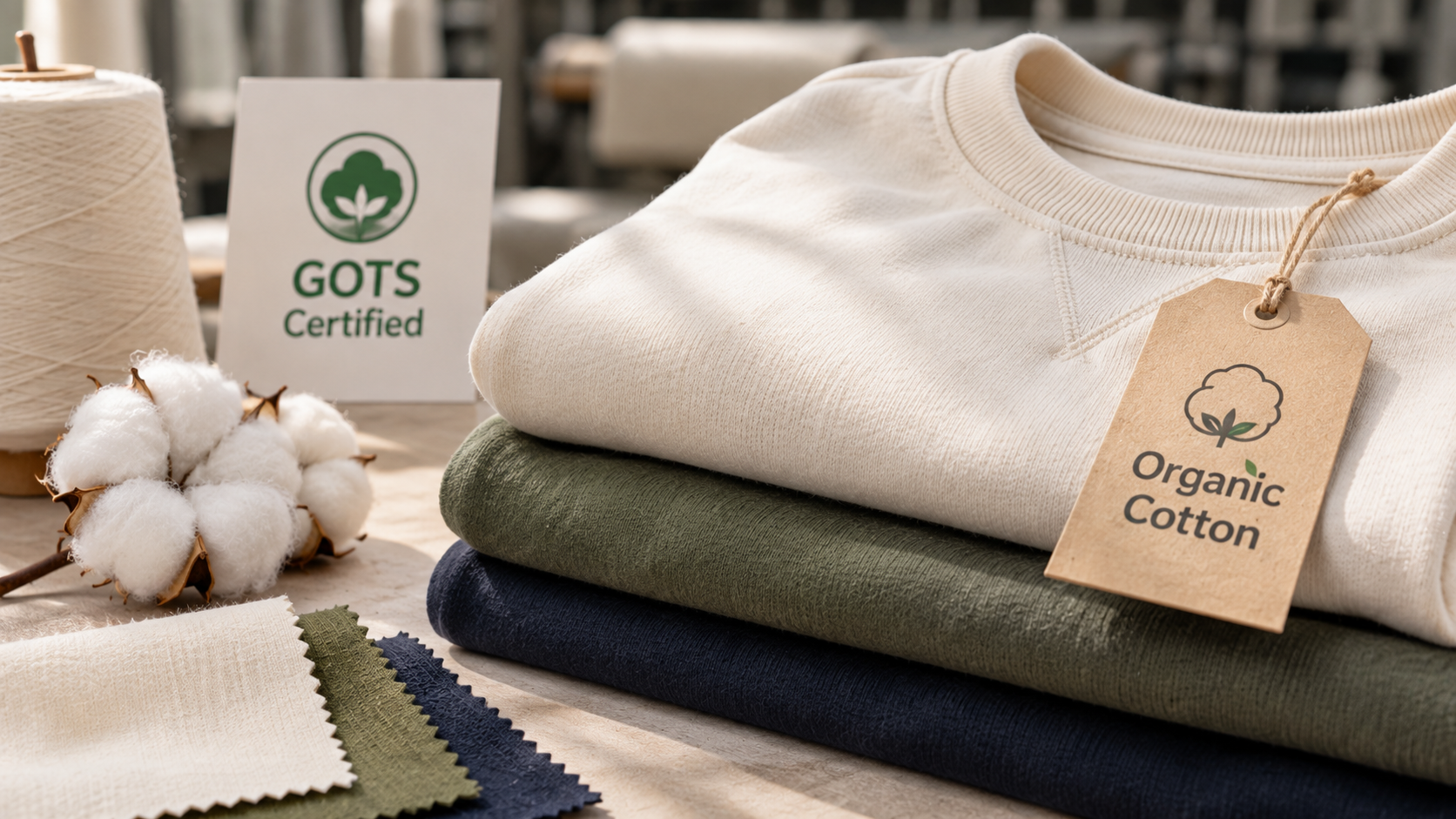
What Organic Cotton Actually Means in Manufacturing
Organic cotton clothing is made from fibres grown without synthetic pesticides, herbicides, or fertilisers. The cotton is farmed using natural methods that are better for the soil and the people working on it.
- No synthetic pesticides or fertilisers used at the farming stage
- Soil health and farmer safety are core requirements of organic certification
- Water usage and land management are also regulated under organic standards
For a garment to carry an organic label, it is not enough that the raw fibre is organic. The entire supply chain has to meet the requirements — including how the fabric is dyed, finished, and processed. This is what GOTS certified clothing covers. GOTS stands for Global Organic Textile Standard and is the most widely recognised certification for organic textiles worldwide.
A garment that uses organic cotton fabric but is dyed with restricted chemicals cannot carry a GOTS label. Brands sourcing organic cotton need to understand this before they start — the certification has to run through every stage, not just the fibre.
How Much More Does Organic Cotton Cost?
Placing an organic cotton bulk order costs more than an equivalent standard cotton order. The price difference is typically 20 to 40 percent higher per unit depending on the GSM, construction, and the supplier's access to certified organic fabric mills.
- Certified farming has higher input costs than conventional cotton growing
- The organic supplier pool is smaller, which limits price competition
- Certification audits add cost at multiple stages — farming, spinning, dyeing, and finishing
This cost increase needs to be planned for before sampling begins. Many brands working with a sustainable clothing manufacturer price their organic range at a higher retail point to account for it. Organic cotton works best as a premium or sustainability-led product line, not a budget option.
The gap between organic and standard cotton pricing has narrowed over the past few years as demand has grown. But it still represents a real cost difference that affects MOQ decisions, margin targets, and retail pricing strategy.
What Garment Types Work Well in Organic Cotton
Organic cotton garments cover the same range as standard cotton in terms of construction and weight. The fabric behaves the same way on the production line. The difference is the supply chain behind it, not the feel or finish of the garment.
- T-shirts, hoodies, sweatshirts, and polo shirts are the most common organic cotton garment types
- Works well where sustainability positioning supports a premium retail price
- Less practical where stretch, moisture management, or abrasion resistance matter
Organic cotton is a strong fit for brands where the sustainability angle is part of the product positioning. If the garment is a commodity basics piece competing on price, the cost premium is harder to justify. If it is part of a considered, story-led collection, organic cotton adds real value to the brand.
GSM Ranges and Fabric Construction
Organic cotton is available in the same constructions and weights as standard cotton. The organic certification is an additional requirement on top of the fabric spec — it does not change the weight, feel, or structure of the fabric itself.
- Single jersey 160 to 200 GSM for T-shirts and lightweight tops
- French terry 240 to 280 GSM for sweatshirts and mid-layer hoodies
- Fleece-back 280 to 320 GSM for heavier hoodies and outerwear-weight pieces
When speccing an organic cotton fabric order, the process is the same as a standard cotton order. You choose the construction, GSM, and colour — and the organic certification is confirmed as a separate requirement at the fabric sourcing stage.
What to Check Before Placing an Order
Not all factories work with certified organic cotton as standard. Some work with it on request, some do not have access to certified suppliers at all. It is worth asking about this before sampling begins so the production process is set up correctly from the start.
- Ask whether the factory sources from GOTS-certified fabric mills
- Request documentation on how the supply chain is traced at each stage
- Confirm what organic or certification claims can appear on the finished garment label
The labelling question matters because some buyers want to include organic certification claims on the garment hang tag or care label. Whether this is possible depends on the certification the factory holds and the documentation they can provide. This is a conversation to have at the brief stage, not after the sample is approved.
Organic Cotton Orders at UMAAS Exports
UMAAS Exports is a Pakistan clothing manufacturer and organic cotton manufacturer based in Lahore, exporting to the UK, US, Canada, Germany, Spain, and the EU since 2018. Fabric spec and certification requirements are confirmed at the brief stage before sampling begins, so the production process is set up correctly from day one.
MOQ is 30 pieces per design with sizes mixed within that run. Lead time is 26 to 42 days from confirmed sample to dispatch. Decoration options including screen printing, DTG, DTF, embroidery, and sublimation are all available on organic cotton garments.
For brands looking to move into organic cotton or add it to an existing line, the process starts with a brief. Share your garment type, target GSM, quantity, and any certification requirements and the team will confirm what is possible before sampling.
Ready to start production?
Tell us about your brand, product, and quantities. We will reply with samples, pricing, and timelines.