
Nylon Fabric for Outerwear: Properties and Bulk Ordering
Nylon fabric is the standard for outerwear and windbreakers. Learn about its properties, common uses, GSM ranges, and what to specify when placing a bulk order.
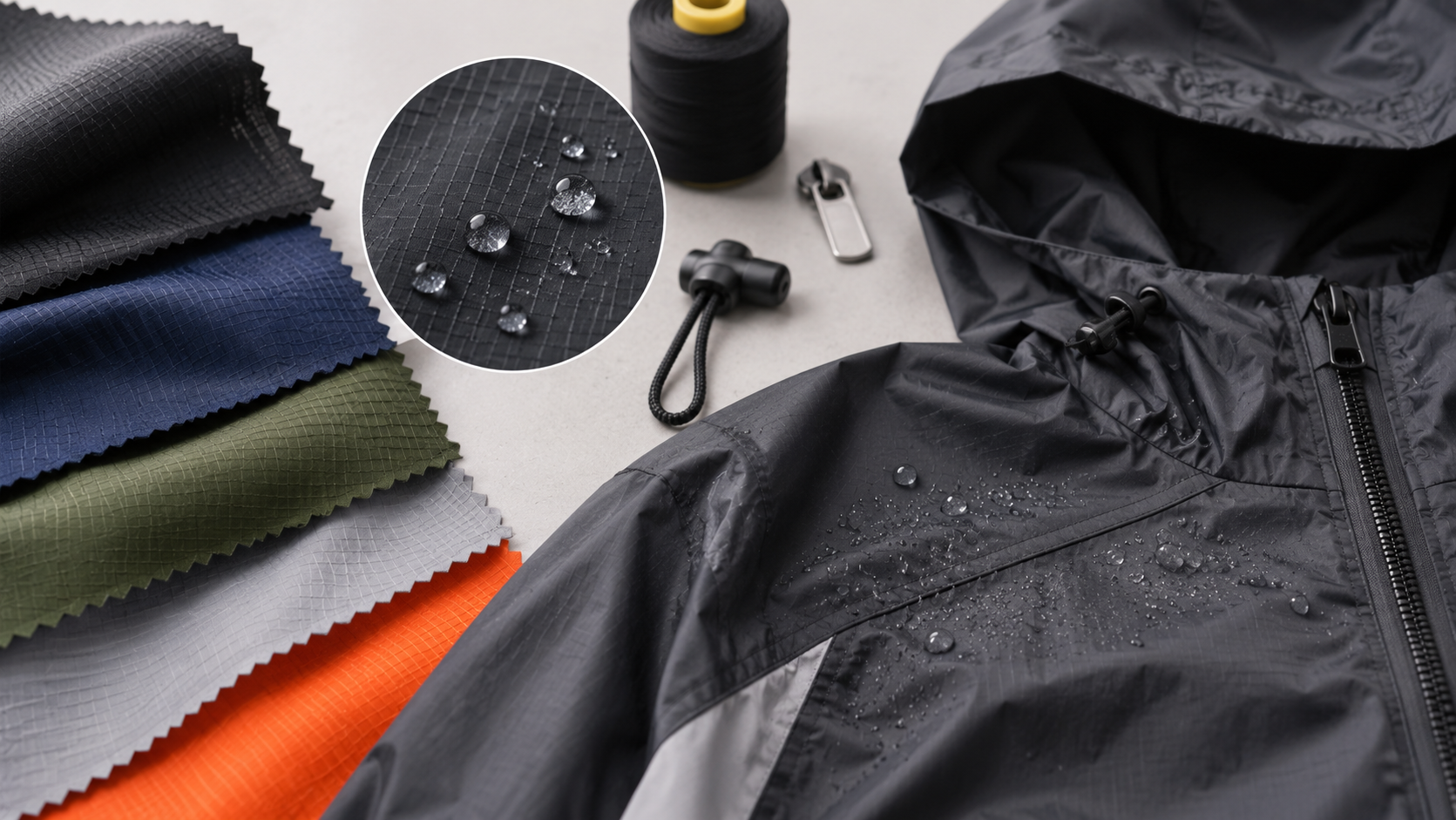
Why Nylon Is Used for Outerwear and Windbreakers
Nylon is one of the most durable synthetic fabrics in clothing manufacturing. It is lightweight, tear-resistant, and handles wind and light rain better than most alternatives at a comparable price point. For brands building nylon fabric outerwear collections — windbreakers, shell jackets, track tops, and lightweight parkas — nylon is usually the first fabric to consider before moving to heavier or more technical materials.
- Lightweight — high strength-to-weight ratio means protection without bulk
- Wind-resistant — tightly woven nylon blocks wind effectively without added lamination
- Tear-resistant — more durable than polyester at the same GSM for abrasion-prone outerwear
- Quick-drying — does not absorb water and dries fast after rain or washing
Nylon delivers wind and light weather resistance without adding significant weight — which is why it dominates the windbreaker and shell jacket category.
GSM Ranges and Common Nylon Constructions
Nylon outerwear fabric typically runs between 40GSM and 200GSM depending on the application. Lightweight nylon (40–70GSM) is used for packable windbreakers and running shells. Mid-weight nylon (80–120GSM) is standard for most windbreaker fabric bulk order production — structured enough to hold shape, light enough for layering. Heavier nylon (140–200GSM) is used for work jackets, tactical outerwear, and garments that need extra abrasion resistance. The two most common constructions are ripstop nylon, which has a reinforcing grid woven into the fabric to prevent tears from spreading, and plain weave nylon, which is smoother and used in more lifestyle-oriented outerwear.
Ripstop nylon is the most requested construction for windbreakers — the grid pattern stops small tears from becoming large ones under stress.
Nylon Fabric Finishes Used in Outerwear
Raw nylon is wind-resistant but not waterproof. Most nylon fabric properties that make it useful for outerwear come from finishes applied after weaving. Understanding which finish you need determines how the garment performs and how much it costs per unit.
- DWR (Durable Water Repellent) — spray-on coating that causes water to bead and roll off; standard on most windbreakers
- PU coating — polyurethane laminate bonded to the back of the fabric; adds waterproofing and structure
- TPU membrane — more durable waterproofing used in performance outerwear; higher cost
- Taffeta lining — lightweight nylon lining added inside jackets for a cleaner finish and easier wear
- Matte finish — reduces sheen for a more understated look on lifestyle outerwear
DWR finish is the most common and cost-effective water resistance option for windbreakers — confirm whether it is included in the fabric spec or needs to be added separately.
Common Nylon Blends in Outerwear Production
Pure nylon is used for many outerwear applications but blending it with other fibres adds properties that improve performance or reduce cost. Most factories producing nylon jacket manufacturing orders stock these standard combinations.
- Nylon and polyester — reduces cost while retaining most of nylon's durability; common in budget outerwear
- Nylon and spandex (5–15% spandex) — adds stretch for athletic outerwear and softshell jackets
- Nylon and cotton — adds breathability and a softer hand feel; used in casual jacket liners and inner layers
- Recycled nylon (rPET equivalent) — made from recovered nylon waste; increasingly requested for sustainability-positioned brands
- Nylon and elastane — used in fitted performance shells where four-way stretch is required
A nylon-polyester blend is the most common cost-reduction approach in outerwear — it lowers the unit price while keeping the wind resistance and durability buyers expect.
What to Specify When Placing a Bulk Nylon Outerwear Order
Nylon outerwear has more variables than a basic jersey or fleece order. For a bulk outerwear manufacturer to quote and sample accurately, your brief needs to cover fabric weight, construction, finish, lining, hardware, and decoration method. UMAAS Exports produces outerwear including jackets and track tops and supports screen printing, DTG, DTF, embroidery, sublimation, and puff printing on nylon garments.
- Fabric weight — specify GSM or the garment category (packable shell, structured windbreaker, work jacket)
- Construction — ripstop or plain weave
- Finish — DWR, PU coating, TPU, or none
- Lining — lined or unlined; taffeta, mesh, or fleece lining if required
- MOQ — UMAAS Exports accepts orders from 30 pieces per design with size mixing within a run
The more complete your brief on finish and lining, the fewer sampling rounds you need — nylon outerwear has more variables than most garment types.
How UMAAS Exports Handles Nylon Outerwear Orders
UMAAS Exports has been manufacturing and exporting garments since 2018, with Pakistan outerwear manufacturer production covering jackets, track tops, and outerwear styles. Orders ship to the UK, US, Canada, Germany, Spain, and the wider EU. Lead time runs 26 to 42 days from confirmed sample to dispatch. Pantone colour matching is available, and the full decoration range including screen printing, DTG, DTF, embroidery, sublimation, puff print, acid wash, and rhinestone work is supported on nylon outerwear. The MOQ is 30 pieces per design with size mixing within a run.
UMAAS Exports covers nylon outerwear from fabric spec through decoration and export — without requiring you to manage fabric sourcing and production separately.
Ready to start production?
Tell us about your brand, product, and quantities. We will reply with samples, pricing, and timelines.