
DTG vs Screen Printing: Which Decoration Method Should Your Clothing Brand Be Using?
A straight comparison of DTG and screen printing for clothing brands covering cost, quality, order size, and which method works best for your production.
What These Two Methods Actually Do
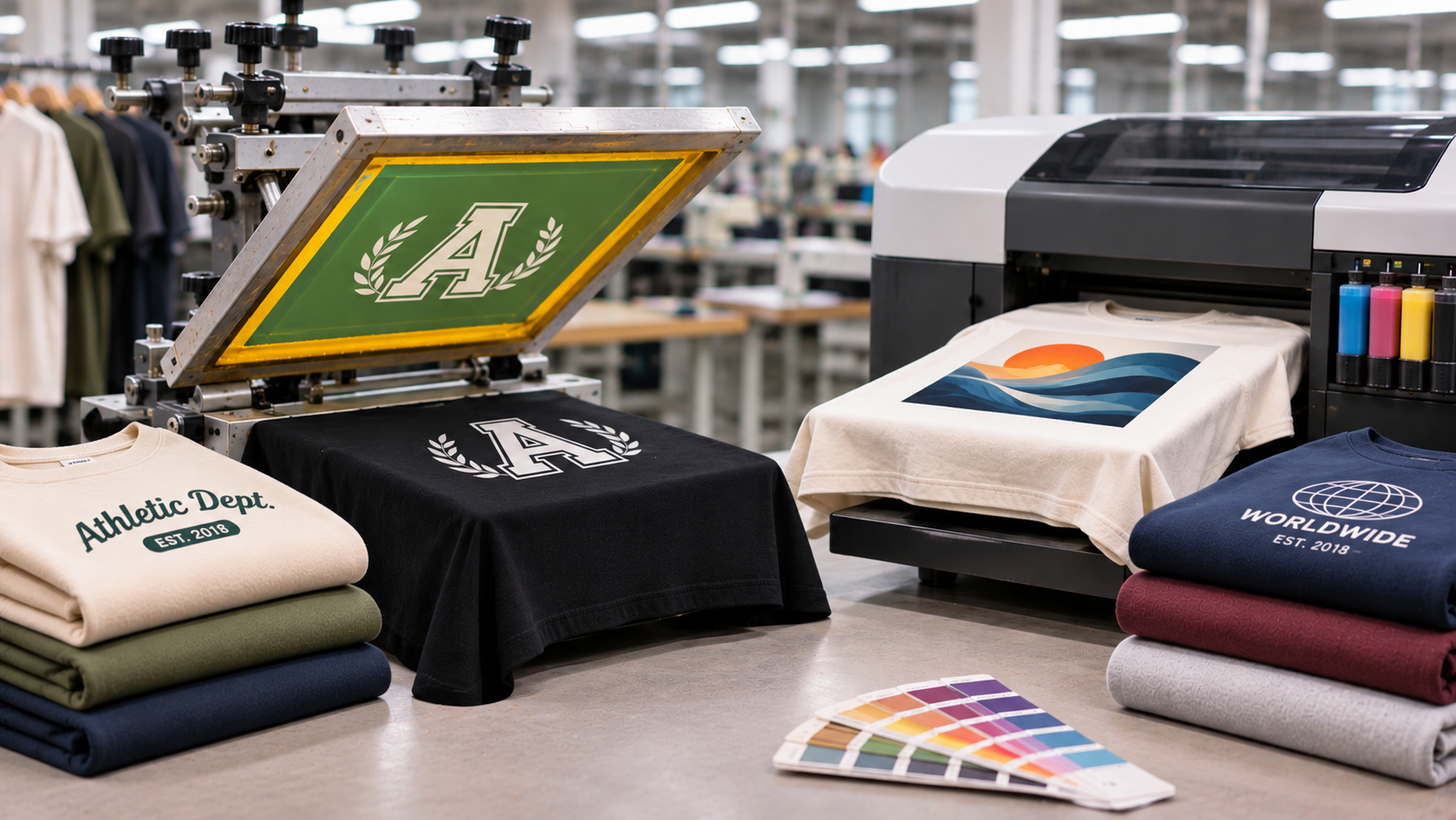
DTG vs screen printing — both are ways to put a design onto a garment, but they work in completely different ways. Screen printing uses physical screens, one per colour in the design. Ink is pushed through each screen onto the fabric in layers, then heat-cured. DTG printing works like an inkjet printer. The machine sprays ink directly onto the fabric fibre by fibre, with no screens, no colour limits, and no setup per job.
Where Screen Printing Wins
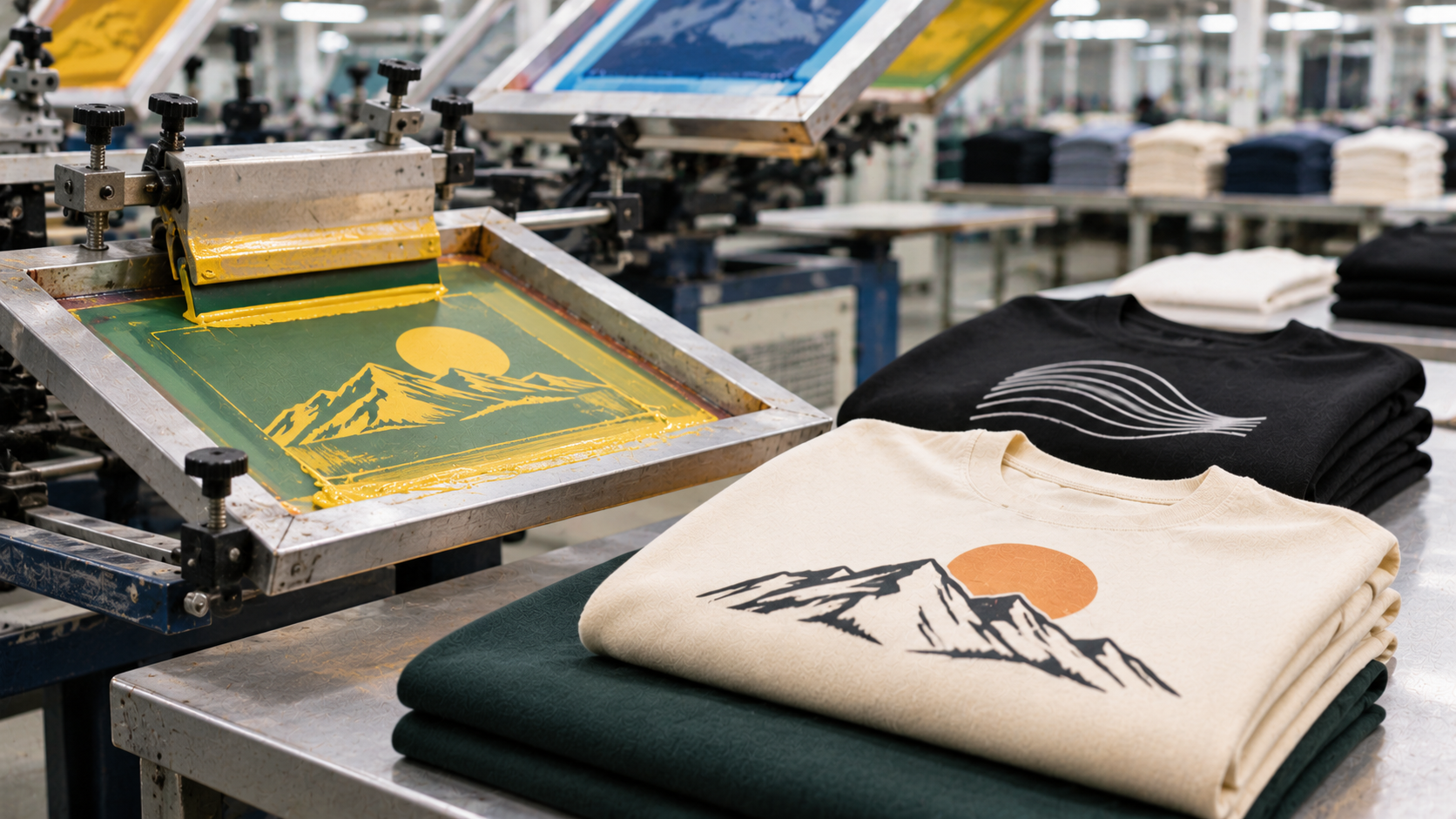
Screen printing bulk orders make economic sense. Once the screens are made, the cost per unit drops fast, which is why it has stayed the standard for branded apparel, event merchandise, and uniform programmes for decades. The ink sits on top of the fabric and bonds through heat curing, which makes it very durable. Colours come out vivid and opaque, even on dark garments, which is harder to achieve with other methods. UMAAS Exports describes their screen printing as producing high-quality, durable prints that are well suited to large orders, with Pantone colour matching available.
Where DTG Wins
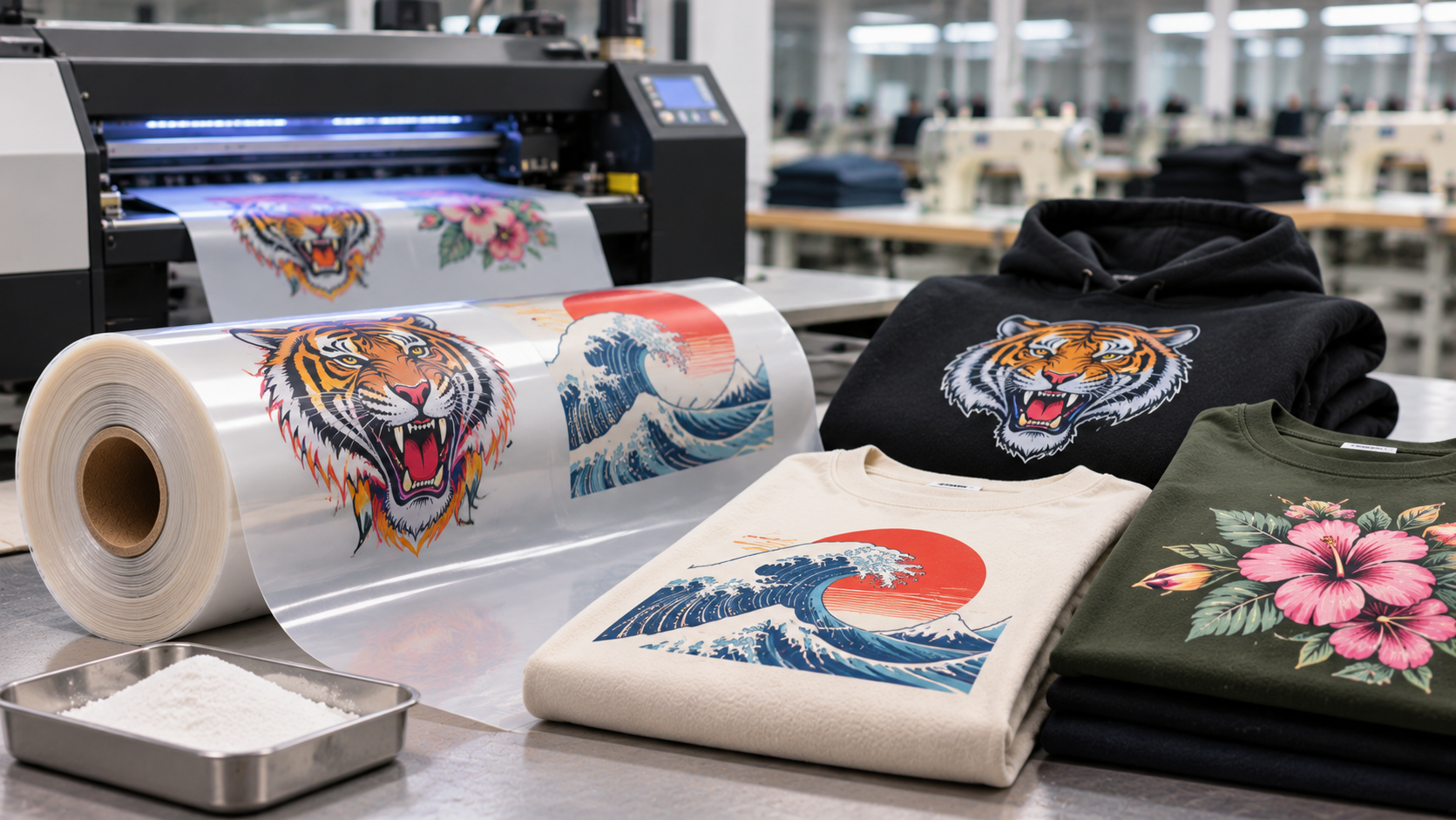
DTG comes into its own when the design is complex or the order is small. Because there are no screens to set up, you can print a photo-realistic graphic, a gradient, or a 20-colour illustration without any extra cost per colour. You can also print one piece at a time, which makes DTG the right call for samples, test runs, limited drops, or personalised orders. UMAAS Exports offers in-house DTG printing for clothing brands and describes it as delivering detailed, full-colour designs with photographic quality.
Cost Comparison: What Actually Drives the Price
Screen printing has an upfront setup cost for each screen. With 1 to 6 colours, that is 1 to 6 screens, each charged separately. Beyond the setup, the per-unit cost is low, so the total gets cheaper the larger the order. DTG has no setup charge per job, but the ink cost per unit is higher. It stays that way regardless of how many pieces you print. This garment printing comparison on cost shows the crossover point varies, but for most brands it sits somewhere between 50 and 100 pieces. Below that range DTG is usually cheaper. Above it, screen printing almost always wins on unit cost.
Fabric Compatibility: Not Every Method Works on Every Material
Screen printing works on most woven and knitted fabrics, but it performs best on cotton and cotton-blend garments. High-spandex fabrics above 10 to 15 percent can cause the ink film to crack over time unless stretch inks are specified. DTG also works best on 100 percent cotton. It struggles on polyester and synthetic blends because the ink does not bond well to the fibre surface without a pretreatment step. If your garment is a performance fabric or a heavily blended construction, DTF transfer or sublimation may be a better fit than either DTG or screen printing.
How to Choose Based on Your Brand Situation
Choosing the right clothing decoration method depends on three things: your order size, your design complexity, and your fabric. If you are placing a large run of a simple 1 to 4 colour design on cotton, screen printing is the standard answer. If you are doing a small run, testing a new design, or printing a photo-quality graphic, DTG is the right starting point. If you are placing a bulk order and want something between the two in terms of setup and flexibility, DTF transfer gives you full-colour capability without per-colour screen costs. UMAAS Exports offers all three methods in-house as part of their thirteen decoration techniques at their Lahore manufacturing facility. Orders start from 30 pieces, with lead times of 26 to 42 days from sample to dispatch.
Ready to start production?
Tell us about your brand, product, and quantities. We will reply with samples, pricing, and timelines.