
Screen Printing for Bulk Clothing Orders: Cost, Setup, and When It Makes Sense for Your Brand
A practical guide to screen printing for clothing brands — setup, cost, when it makes sense, and what to confirm before placing your order.
What clothing brands need to know about screen printing before committing to a bulk decoration order.
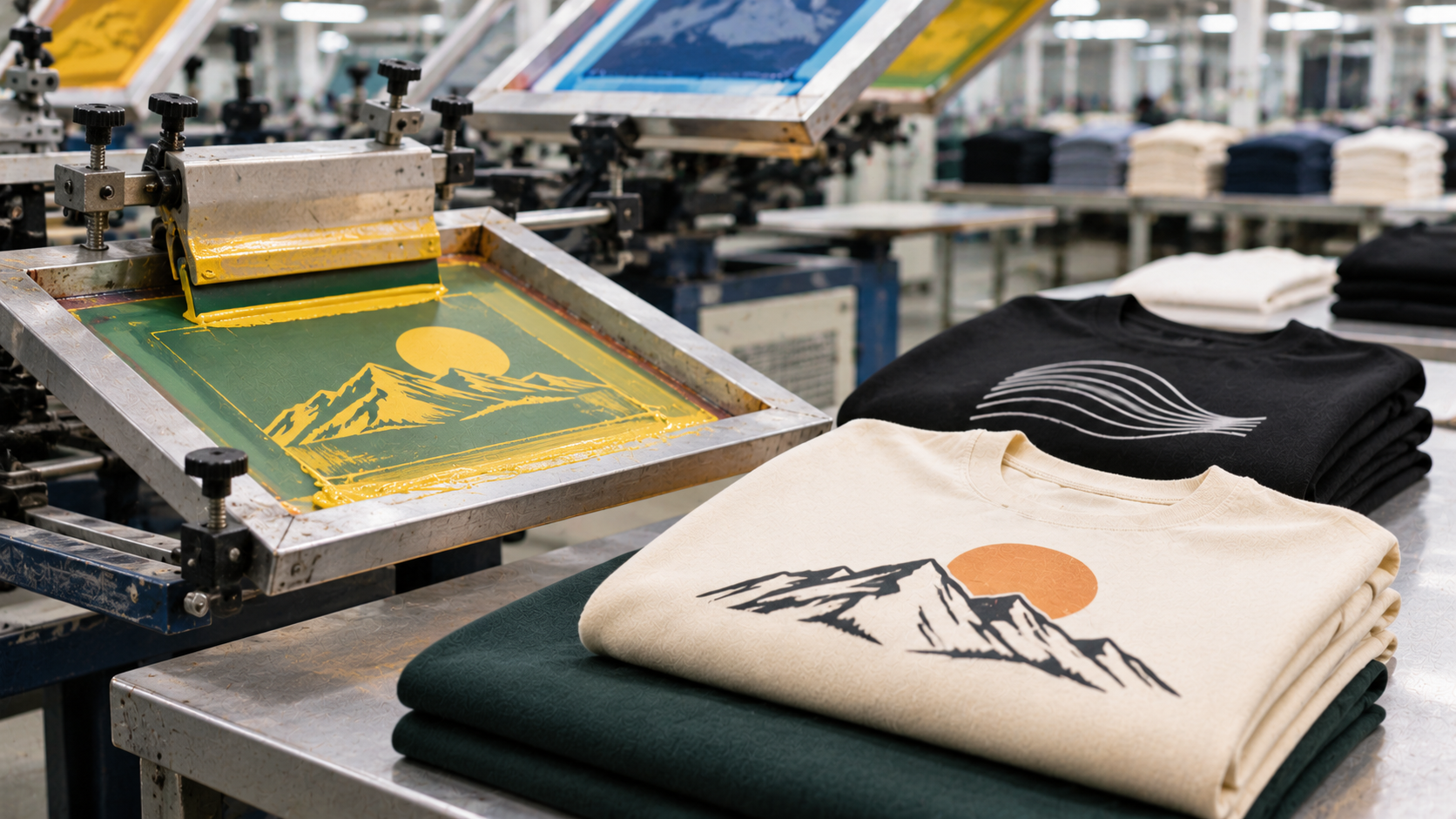
What Screen Printing Is and How It Works
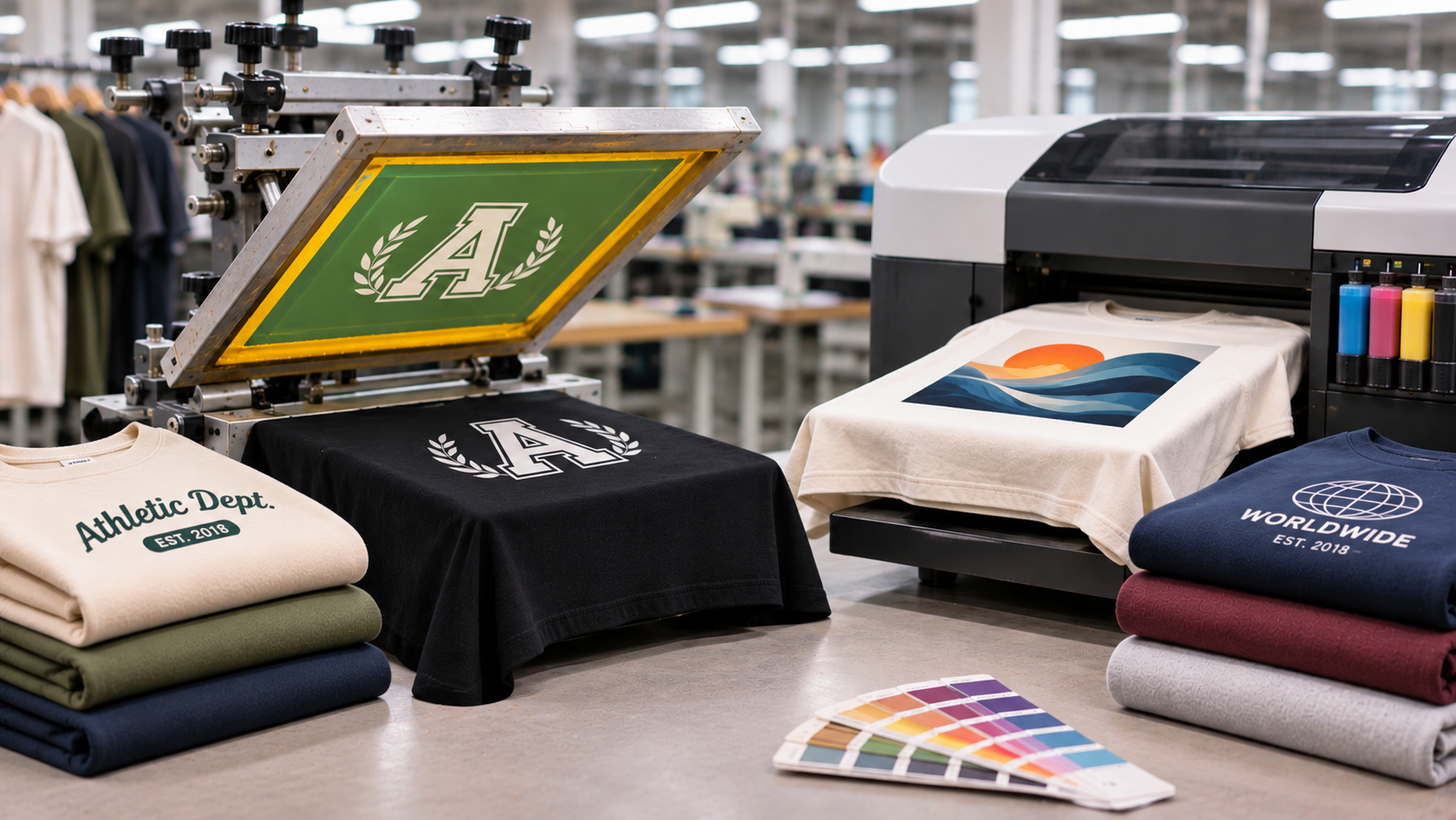
Screen printing is a decoration method where ink is pushed through a mesh screen onto the fabric using a squeegee. Each colour in a design requires its own screen, which is why setup takes time and cost upfront. Once the screens are made, the same design can be printed across hundreds or thousands of garments quickly and consistently. For brands placing bulk screen printing orders, this upfront investment pays off at volume.
Why Screen Printing Works Well for Large Orders
The economics of screen printing clothing brands rely on volume. Setup costs — making the screens, mixing inks, test printing — are fixed regardless of how many garments you print. At low quantities, that cost per unit is high. At high quantities, it spreads out and the per-unit cost drops significantly.
For orders of 50 pieces or more with the same design, screen printing is usually more cost-effective than DTG or DTF. It also produces prints that are more durable than digital methods on most fabrics, with colours that hold through repeated washing without fading quickly.
What Affects the Cost of Screen Printing
Several factors determine the total cost of a screen printing garment order. Simplifying your design to fewer colours and a single print location is the fastest way to reduce cost per unit.
- Number of colours in the design — each colour is a separate screen and a separate setup cost
- Number of print locations — a front chest print and a back print are two separate setups
- Order quantity — the more units, the lower the cost per piece
- Ink type — standard plastisol ink, water-based ink, and specialty inks like puff or metallic each carry different costs
- Fabric type — the fabric surface affects ink adhesion and may require different inks or curing processes
When Screen Printing Makes Sense for Your Brand
Screen printing is the right choice when you have a consistent design running across a large quantity, the design uses a limited number of solid colours, you need prints that last through heavy use and repeated washing, and your order size justifies the setup cost. It is less suitable for designs with photographic detail, gradients, or many colours, where DTG or DTF would handle the complexity better. For brands building branded apparel screen printing programmes across seasonal drops or uniform ranges, screen printing is usually the production backbone.
What to Confirm With Your Manufacturer Before Production
Before placing a screen printing order, confirm the minimum quantity per design, the maximum number of colours supported, the ink type being used and whether it is included in the unit price, the print size limits, and the curing and wash-care specifications. UMAAS Exports offers screen printing as one of thirteen in-house decoration methods at their Lahore manufacturing facility. They describe it as producing high-quality, durable prints suited to large orders, with Pantone colour matching available across their production.
How UMAAS Exports Handles Screen Printing Orders
UMAAS Exports has been manufacturing and exporting garments since 2018. As a Pakistan clothing manufacturer offering in-house screen printing, they handle decoration alongside cut-and-sew production in one facility. Orders start from 30 pieces per design with size mixing allowed, and lead times run 26 to 42 days from sample to dispatch. In addition to screen printing, decoration options include embroidery, DTG, DTF, sublimation, and puff printing. UMAAS ships to the UK, US, Canada, Germany, Spain, and across the EU.
Ready to start production?
Tell us about your brand, product, and quantities. We will reply with samples, pricing, and timelines.