
What Is DTF Printing? How Direct to Film Works and Why Clothing Brands Are Using It
Learn how DTF printing works, which fabrics it suits, how it compares to screen printing and DTG, and when clothing brands should use it for bulk orders.
What Is DTF Printing?
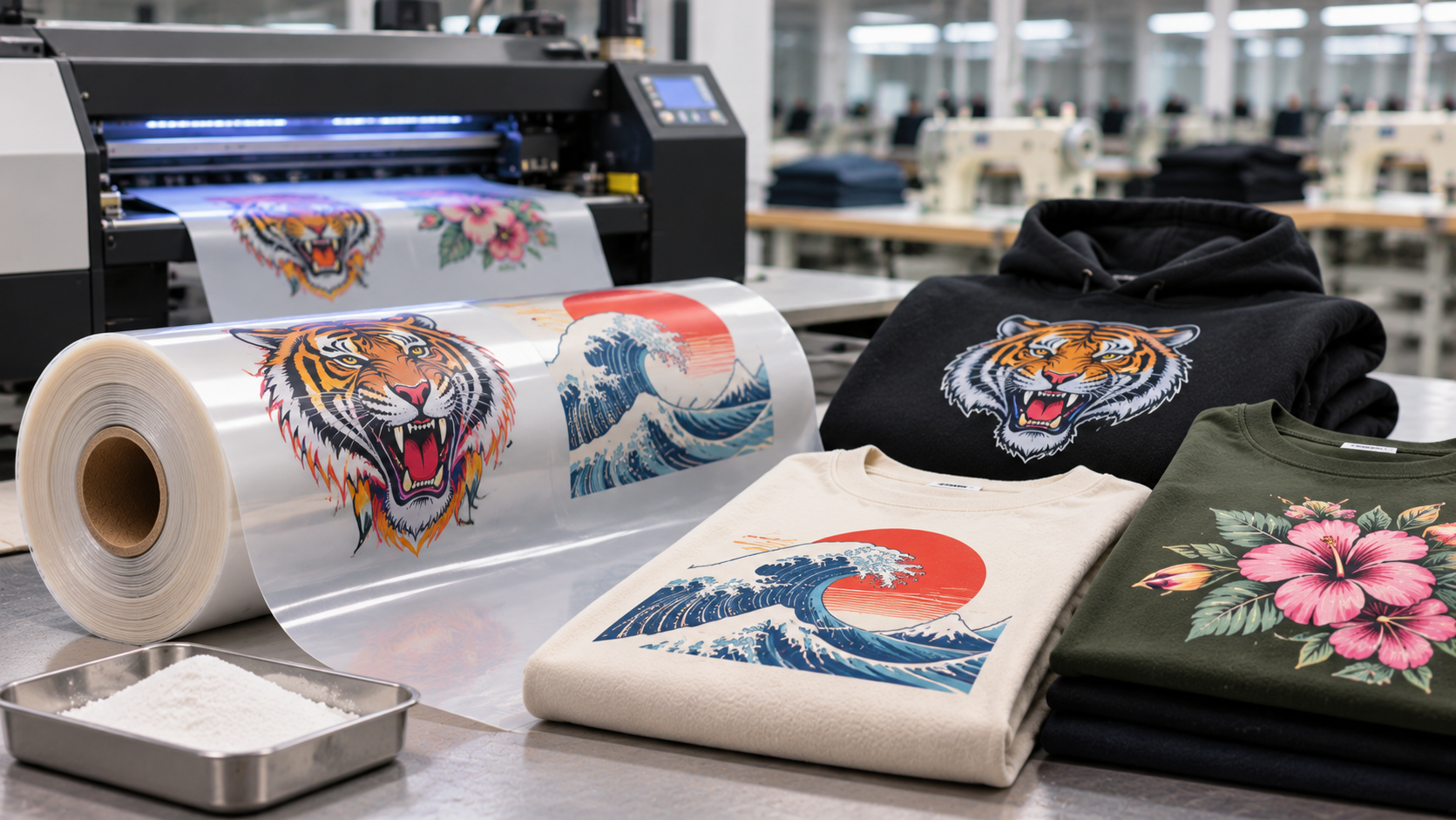
DTF printing, or direct to film printing, is a decoration method where your design is printed onto a special PET film first, then transferred onto the garment using heat and adhesive powder. The design never touches the fabric until the transfer step, which is what makes it different from both screen printing and DTG.
The process has grown quickly because it removes two of the biggest friction points in garment decoration: fabric limitations and colour restrictions. Direct to film printing works on cotton, polyester, nylon, blends, and most other fabric types without any pretreatment required.
How the Process Works
The DTF process runs in three steps. First, the design is printed onto PET film using water-based inks. Second, hot-melt adhesive powder is applied to the wet ink and cured, bonding the powder to the design. Third, the film is heat-pressed onto the garment at around 165 degrees Celsius for 15 to 20 seconds. Once cooled, the film peels away and leaves a clean, durable transfer on the fabric.
There are no screens to prepare and no pretreatment step required. Each job goes straight from file to film to garment. This makes the setup faster than screen printing and more fabric-flexible than DTG.
How DTF Compares to Screen Printing and DTG
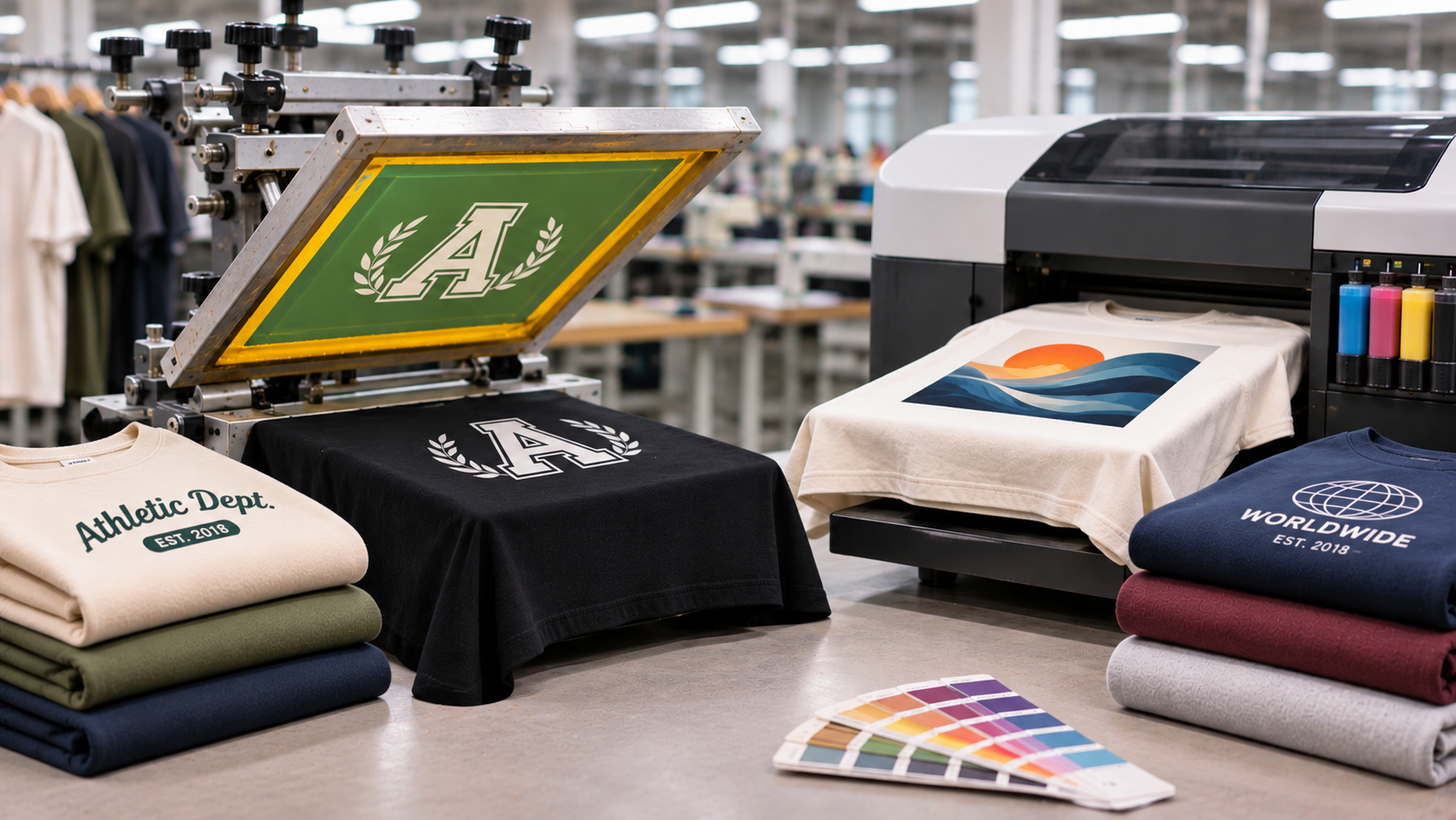
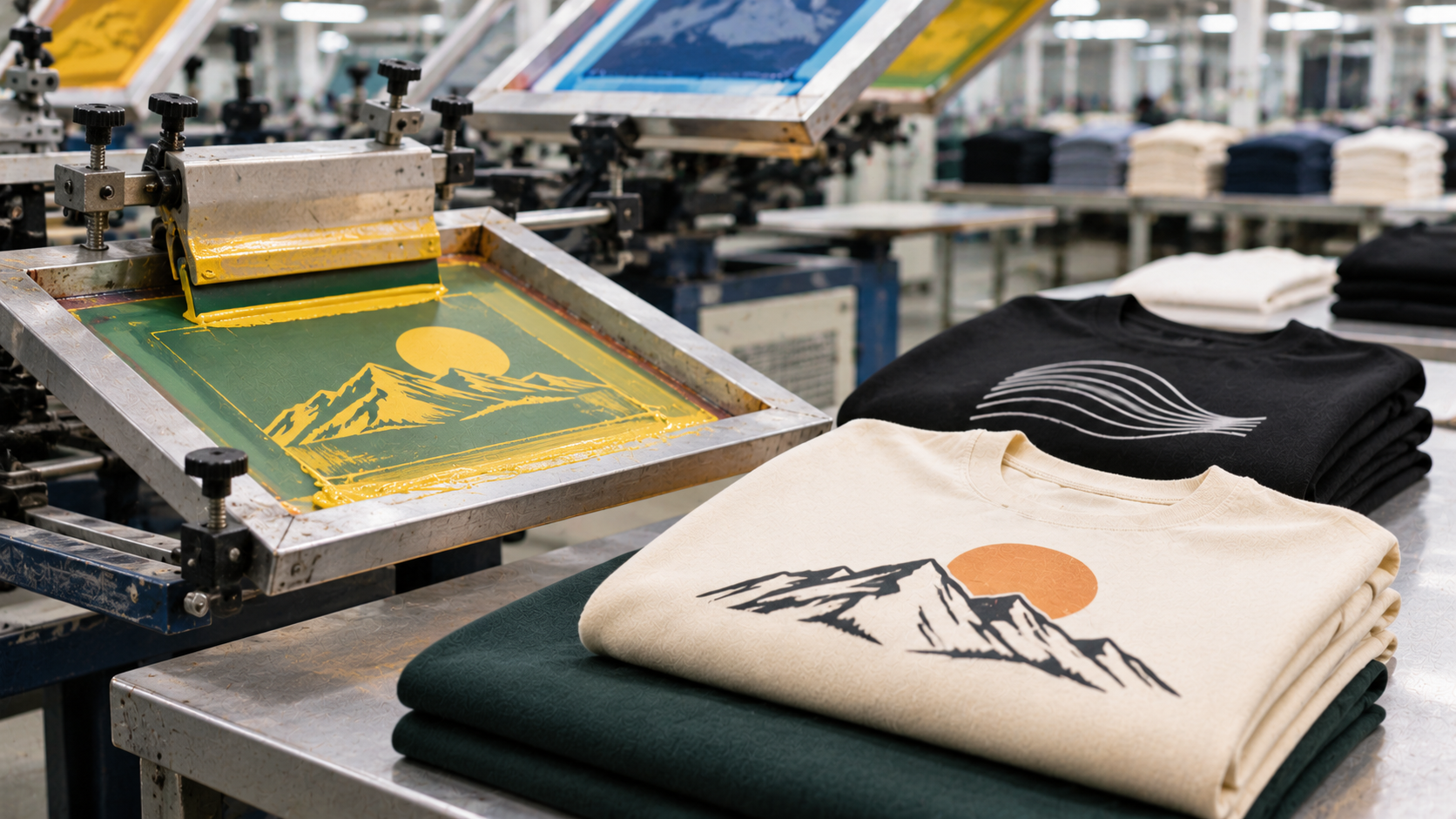
Screen printing builds the design directly on the fabric using mesh screens and ink layers, one screen per colour. It is cost-effective for large runs of simple designs but requires setup time and cost per colour. DTG prints directly onto the garment surface like an inkjet printer, handles complex graphics well, but works best on 100 percent cotton and needs fabric pretreatment.
DTF vs screen printing: DTF has no per-colour setup cost and handles full-colour designs without any extra charge. Screen printing still wins on unit cost for large runs of simple, few-colour designs. For anything with gradients, fine detail, or mixed fabric types, DTF is the more practical option.
DTF vs DTG: DTG requires pretreatment and performs poorly on synthetics. DTF skips pretreatment entirely and bonds well to polyester, nylon, and blended fabrics. For brands working with performance wear or mixed fabric lines, this is a meaningful difference.
Where DTF Makes Sense for Clothing Brands
DTF suits brands that need flexibility without sacrificing print quality. It fits well in these situations:
- Your order is small or mid-sized and screen printing setup costs do not make sense
- Your design has multiple colours, gradients, or photo-realistic detail
- Your garment is a synthetic or blended fabric where DTG struggles
- You are sampling a new design before committing to a larger screen printing run
- You need consistent output across different garment styles in the same order
Brands using DTF as one of several clothing decoration methods can keep more of their production under one supplier rather than splitting orders by fabric type or design complexity.
Print Quality and Durability
DTF prints are vivid and hold detail well, including fine lines, small text, and gradients. The adhesive layer gives the print a slightly raised feel compared to DTG, which is worth confirming in a sample if hand-feel matters for your product. Durability is strong when the garment is washed inside out on a cool or warm cycle. Hot washes and tumble drying will shorten the life of any transfer print, DTF included.
Colour accuracy is consistent across runs because the design is printed digitally from file, with no screen variables or ink mixing. For branded orders where colour consistency matters, this is a practical advantage.
DTF at UMAAS Exports
UMAAS Exports offers DTF transfer as one of thirteen decoration techniques available in-house at their Lahore manufacturing facility. It sits alongside screen printing and DTG as part of a full decoration menu, which means you can specify different methods for different styles within the same order. Orders start from 30 pieces, with lead times of 26 to 42 days from sample to dispatch.
If you are placing a mixed order with different fabrics or design types, confirming the right method per garment style at the sampling stage will save time and avoid reprints later.
Ready to start production?
Tell us about your brand, product, and quantities. We will reply with samples, pricing, and timelines.